Digging deeper into the story? Archaeology at the Carpenter Site
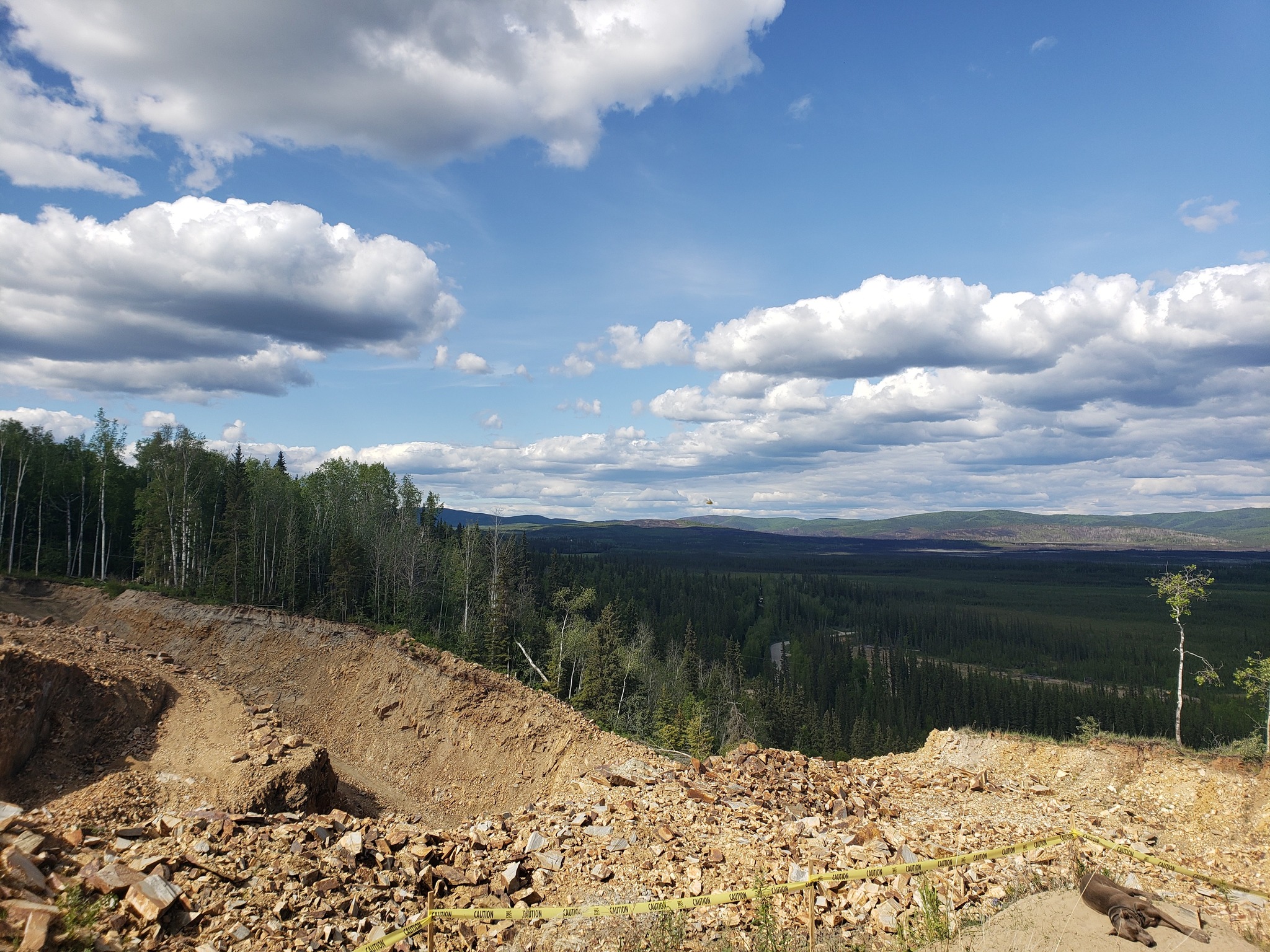 The Tanana River Valley seen from the Carpenter Site, June 2025
Back in June I had the opportunity to cover an active archaeological excavation at the Carpenter Site near Delta Junction, Alaska as part of my work with the University of Alaska Anchorage (UAA). The dig was part of a field school for undergraduate and graduate students led by UAA’s Professor Gerad Smith.
A co-worker and I spent two days as guests at the site, and I was able to interview and observe the students and volunteers as they worked. From this, I produced a three part series about the archaeology at the Carpenter Site:
Observing the dig held special significance for me, not just because of my background in archaeology. A decade earlier, in 2016, I attended a field school at the Mead Site which is within walking distance of the Carpenter Site. I was honored to meet the next generation of Alaskan archaeologists.
Structuring the series
With notes, a dozen recorded interviews and hundreds of photographs, I was faced with the happy problem of deciding how to organize all of hte information into a coherent narrative.
I took inspiration from Professor Smith’s syllabus for teaching the field school. Smith taught the history and archaeology of the area in a reverse chronological order, starting with the recent cultural past and working back to the Pleistocene. This outline reflected the order in which the students would dig through the layers at the site, starting at the youngest layers at top and working down to the oldest.
In ‘Why is a tin can an artifact?’, I provided an overview of the 20th century history in the area along with an explanation from the students about the metal artifacts they had found in the site’s upper layers. In ‘A left-handed stone tool?’, I focused on the pre-colonial Dene cultural history at the site, along with the lithic tools uncovered during the field school. Finally, in ‘Ice Age cooking?’ the series concluded by looking at the lowest layers at the Carpenter Site which yielded animal bones and hearths from 12,000 years ago.
About the Carpenter Site
The Carpenter Site is located on a bluff near the mouth of the Shaw Creek, about a half-hour drive from the small community of Delta Junction, Alaska. The site is also known as “Naayii’ęę’” — a traditional place name for the area in the Middle Tanana Dene language, meaning “it is visible across.”
For those interested in learning more about the pre-colonial history and archeaology of the region, I highly recommend reading The Gift of the Middle Tanana by Gerad Smith.